
Hand of the Free Marked
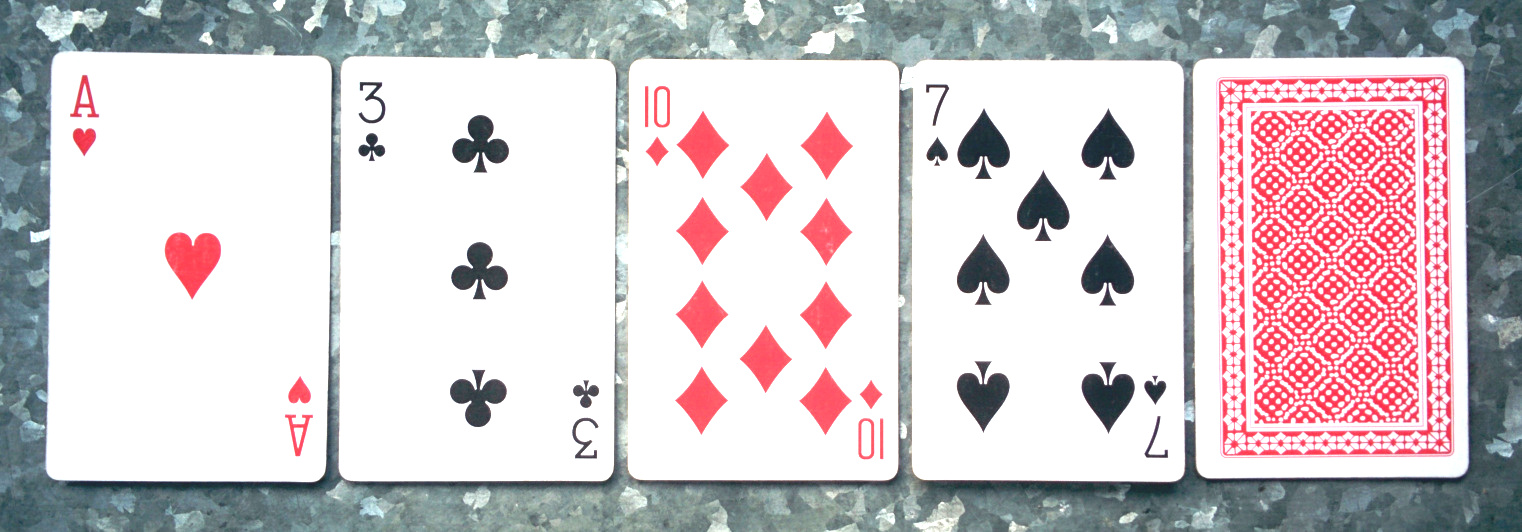
The assistant uses two ways of passing information to the magician. First, they can pick which one of the $k$ cards to keep hidden. Second, they can rearrange the other $k-1$ cards in a specific way. For the case $n=52$ and $k=5$ both techniques are needed, since there are only $24$ ways of rearranging four cards, which is not enough to reliably signal the fifth card. It is an interesting exercise to come up with a simple, easy-to-remember strategy for executing this trick, but right now you have another concern.
You were planning to perform this trick today, but just now you have learned that the deck has more cards than you expected. The trick may be impossible! In desperation, you have decided to cheat a little. You have $m$ distinguishable ways of marking the backs of the playing cards. You have marked the backs of all $n$ cards, allowing you to narrow down the possibilities for the $k^{\text {th}}$ card. For example, if there are $6$ cards marked with a particular method, and you see that the back of the $k^{\text {th}}$ card is marked with that method, you know it must be one of those $6$ cards.
Determine the probability that you will successfully guess the $k^{\text {th}}$ card, assuming you and the assistant execute an optimal (but likely very complicated!) strategy.
Input
The input contains one line with several integers. The first integer gives $k$ ($2 \leq k \leq 10$), the number of cards that will be selected. The second integer gives $m$ ($1 \leq m \leq 10$), the number of ways of marking the cards. The line is completed by $m$ positive integers, giving the number of cards marked with each distinct method. The sum of these $m$ integers is $n$ ($k \leq n \leq 10^9$), which is the size of the deck.
Output
Output the highest possible probability of guessing the $k^{\text {th}}$ card correctly, accurate up to an absolute error of $10^{-9}$.
| Sample Input 1 | Sample Output 1 |
|---|---|
4 1 28 |
0.96 |
| Sample Input 2 | Sample Output 2 |
|---|---|
3 3 5 12 3 |
0.854385964912 |